Menu


Colombian Coffee and Women Coffee Farmers
August 25, 2021 5 min read
Women Coffee Farmers in Colombia: The People Behind the Coffee
I've spent most of my life standing in front of a coffee roaster.
I started roasting in 1980, and after all these years I still love that moment when green coffee begins to change. The aroma develops, the beans take on color, and you know you're getting closer to finding what that coffee can become.
But the longer I've roasted coffee, the more I've come to appreciate something else.
My hands are not the first hands to touch it.
By the time a Colombian coffee reaches our roastery, an extraordinary amount of work has already happened. Someone cared for those coffee trees. Someone watched the weather. Someone waited for the cherries to ripen. Someone harvested them and helped turn that fruit into the green coffee that eventually finds its way to a roaster like me.
And many of those hands belong to women.
The People Behind Colombian Coffee
We talk about Colombian coffee all the time. We talk about its growing regions, elevations, varieties and flavors. As a roaster, those things matter to me. They're part of understanding the coffee. But Colombia isn't just an origin printed on the front of a coffee bag. It's a place. And coffee there is grown by people.
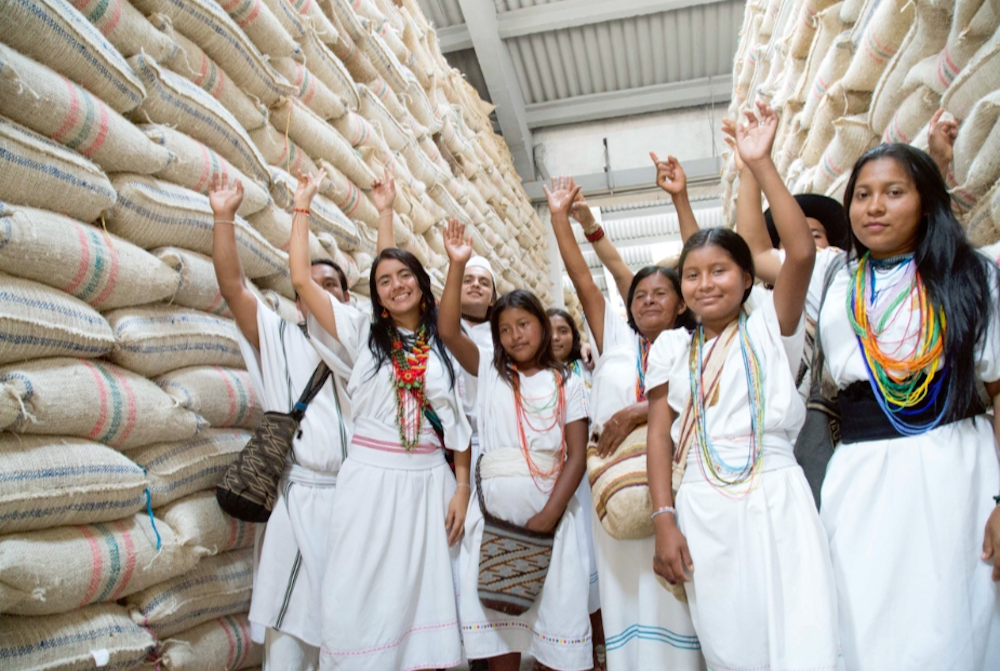
Across Colombia's coffee-growing communities, women work as coffee farmers and producers and throughout other parts of the coffee industry. Some manage farms. Some work alongside their families. Some have organized with other women producers to strengthen their businesses and create new opportunities.
The International Women's Coffee Alliance's Colombia chapter today includes hundreds of women producers, along with women working in other parts of the Colombian coffee value chain.
What stays with me is thinking about the individual farmer walking through her coffee trees and making decisions that, months later and thousands of miles away, I may be able to taste in the cup.
Long Before the Coffee Reaches My Roaster
People sometimes talk about the roaster as though we're the ones who create the coffee.
A roaster can do wonderful things with good green coffee. We can develop sweetness, body, aroma and complexity. We can make decisions about time, temperature and airflow that dramatically affect the final cup.
The farmer gives me something worth roasting.
Coffee farming requires patience. You don't plant a coffee tree today and drink its coffee tomorrow. There are seasons and harvests. There are good years and difficult years. There are countless decisions before a coffee cherry is ever picked.
Then the ripe coffee has to be harvested and processed, dried and prepared before it begins its journey out of Colombia.
When I finally receive that green coffee, I'm entering a story that began long before me.
The Women Growing Coffee in Colombia
There isn't one story that represents every woman coffee farmer in Colombia, and I don't want to pretend there is.
Every farm is different. Every family is different.
But when you start listening to their individual stories, coffee becomes much more personal.
There's the story of María Esperanza Fajardo in Valle del Cauca, who returned to her family's land after years of living and working in Bogotá and became a coffee farmer, following a path her father had taken before her.
There are women in Santander who have worked together through agricultural programs designed to strengthen their farms and their economic opportunities.
There are women participating in producer organizations and associations, learning more about coffee quality, finance and markets, and taking larger roles in decisions surrounding the coffee they grow. Organizations operating in Colombia have developed programs specifically around those opportunities.
I think we sometimes forget how many real lives are connected to something we consume so casually every morning.
A Cup of Coffee Has a Long Memory
When you spend your life roasting, you develop tremendous respect for green coffee.
I can open a bag and see differences immediately. I can put the coffee in the roaster and watch how it responds. Eventually, I can taste what happened.
But behind what I'm seeing and tasting is everything that came before.
The soil, weather, elevation, coffee tree, harvest and the decisions made by the people who cared for that coffee.
That's why the work of Colombian coffee farmers matters in the cup.
The choices made at the farm and during harvesting and processing help determine the quality and character of the green coffee. By the time it reaches me, much of its potential is already there.
Women Are Creating Their Own Future in Coffee
Women have long participated in coffee production, but today more attention is being paid to their role as producers, farm owners, entrepreneurs and leaders within coffee communities.
In Colombia, organizations working directly with women in coffee have focused on things that can make a practical difference: agricultural knowledge, coffee quality, financial education, leadership and connections to markets.
Research involving women coffee growers in Cauca has found that working in coffee production does not necessarily mean women have equal economic opportunities or equal influence over decisions.
Those are complicated issues, and I'm a coffee roaster, not a development economist. But after more than four decades in this business, I do know one thing very well:
Coffee doesn't exist without the people who grow it.
And the more we know about those people, the harder it becomes to think of coffee as just another product sitting on a shelf.
From Their Hands to Ours
There's a moment I love at the coffee roastery.
A roast is finished, the coffee comes out, and you're standing there looking at what months, or really years, of work have finally become.
I may be the person roasting it that day, but I know the coffee didn't begin with me.
Somewhere in Colombia, someone planted a tree. Someone cared for it. Someone watched the cherries ripen. Someone picked the coffee. Someone helped prepare it for the journey that eventually brought it to us.
Sometimes that person was a woman working on land her family has known for generations. Sometimes she's building something new for herself and her family. Sometimes she's part of a community of women trying to create a stronger future through coffee.
Then, eventually, that coffee reaches my hands.
I get to roast it.
And you get to brew it.
That's a remarkable journey when you think about it.
So the next time you make a cup of Colombian coffee, take a moment before that first sip.
And remember that there are people behind that cup.
As a roaster, I never want to forget them.
— John Weaver
Master Coffee Roaster & Co-Founder
Weaver's Coffee & Tea
Subscribe
Sign up to get the latest on sales, new releases and more …